Not a Door You Pick. A Way of Standing in the Room.
Most people meet AI through two doors: refuse it, or surrender to it. Both are fear wearing different clothes. Be AI-gile is the third path — you stay in charge by choosing where you stand, on purpose, again and again.
Be. AI. gile.
Each pillar carries weight the other two cannot. Drop one, and the third path collapses back into refusal or surrender.
Stay Human
Lead with the part of you no model can replicate. This is the load-bearing pillar — where you keep a human in the loop, verify before you trust, and check output against your actual values instead of letting fluency stand in for truth.
The Thinking Partner
Not oracle, not threat — the most capable thinking partner most of us will ever have within reach. It multiplies your reach: drafts, simulates stakeholder reactions, and shows you the angle you couldn't see alone.
Stay Unstuck
Borrowed from a world that already solved a version of this problem. Move lighter, move faster, adapt on purpose. You don't need certainty to begin — you need a direction and a willingness to be wrong quickly and cheaply.
The mirror has handed you extraordinary new reach. What it can't hand you is the one thing that reach makes more precious: a steady sense of where you're trying to go, and why.
The Four Tenets
A tenet is a belief, not a step. All four are carried at once — the practice is learning to reach for whichever one a given moment actually calls for.
01 — Observe the Chaos
Clear sight has to come before action. Before you leap toward solving, notice what's happening, what's not working, what's quietly shifting. AI becomes your empathic companion here — ask it what a skeptical stakeholder might say, what a policy expert might worry about, what pattern you're too close to see.
Try: Name the Tension · Question the Obvious · Map What You Can't Explain
02 — Start Lighter, Move Faster
Big moves raise the stakes and stall action. This tenet is the discipline of beginning anyway — the cheap version, the rough draft, the ten-minute conversation instead of the finished plan. AI drafts three versions in seconds so you can test instead of theorize.
Try: Shrink the Idea · Mock It Up · Test It With One Person
03 — Act with Intention
Action has never been easier to produce — a model will offer ten options before the question behind them has fully formed. This tenet insists a human stays in the loop and outputs are measured against what a person actually believes, not allowed to substitute for it.
Try: Define Success Before You Act · Choose a Small, Measurable Signal · Choose Your Next Move

04 — Reflect and Reframe
Without this tenet, you're not building on what happened — you're just spinning. Reflection is where meaning gets made and where momentum is given direction. It's the tenet the surrounding culture is most eager to skip, because there's always a next thing.
Try: Tell the Story, Then Step Outside It · Document What You Learned · Evaluate Your Tools, Not Just the Outcome
A parent at the kitchen table and a leader in the boardroom are running the same practice.
The stakes scale. The number of people affected scales. The underlying shape — observe, start, act, reflect — holds steady from the smallest room to the largest. That's why one framework can serve a person, a family, a team, and an institution without being rebuilt for each.
Theory in Brief
Be AI-gile is a remix — a convergence of proven ways of thinking, reimagined for an AI-augmented world.
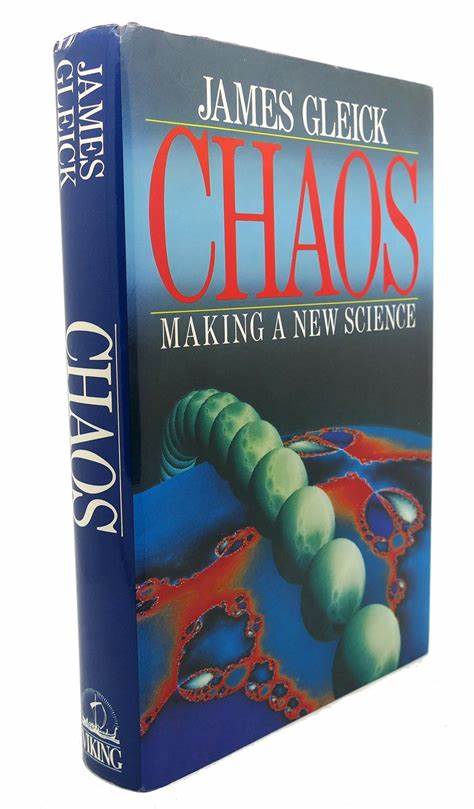
Chaos & Complexity
James Gleick. Complex systems, even disordered ones, follow patterns of emergence. Be AI-gile invites you to observe the mess, not fear it — to work inside the swirl where patterns and breakthroughs emerge.
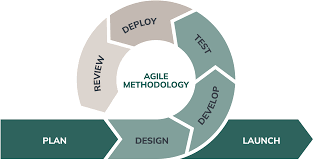
Agile, Lean & Kanban
Iteration, feedback, and continuous delivery over rigid, linear planning. Plan lightly, build quickly, review often, evolve with purpose — AI lets you move faster without losing sight of human values.
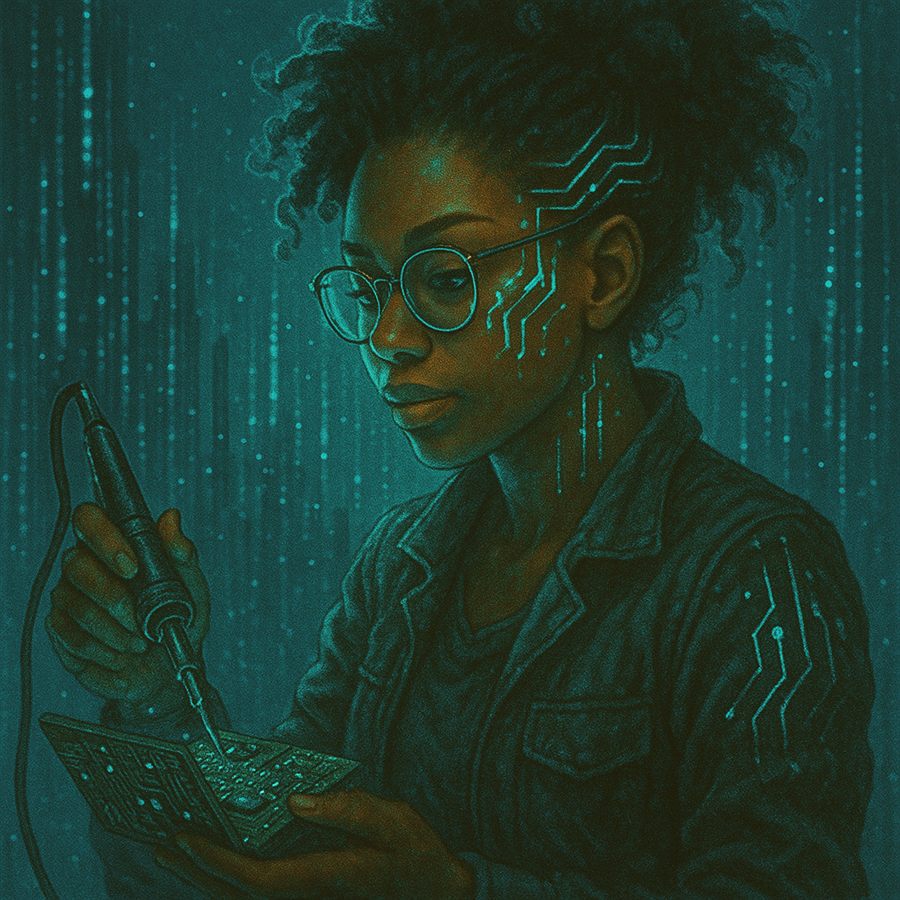
Design Thinking
Empathize deeply, prototype quickly, fail forward. AI multiplies the ideas you can test and the assumptions you can challenge — you're designing for insight, not perfection.
Multiple Minds
Howard Gardner & Daniel Pink. Thriving in complexity demands empathy, synthesis, play, and ethical judgment — not just logic. AI becomes scaffolding that frees cognitive space for what makes us most human.
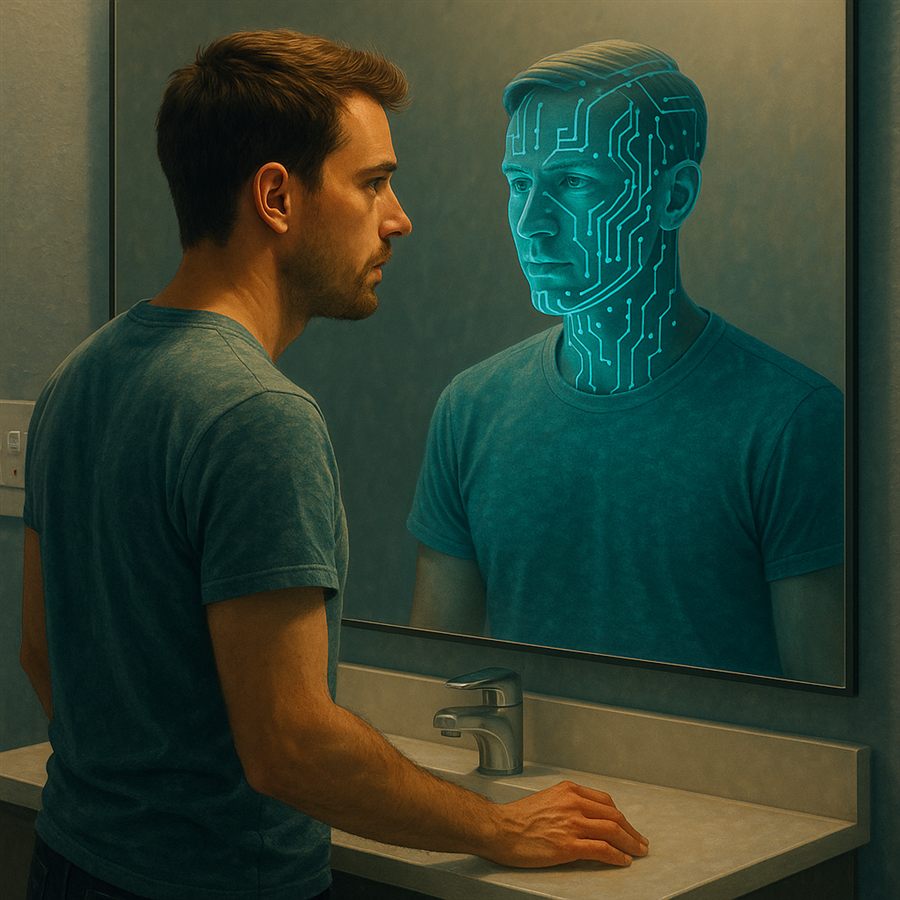
Post-Human Partnership
Donna Haraway & cyberpsychology. Our thinking is shaped by what we interface with. In Be AI-gile, AI isn't the answer — it's a co-pilot, helping you generate, compare, and reflect in real time.
Communities of Practice
Etienne Wenger. Change is social, not just technical. We learn best by trying things together, on the job, alongside people further along than we are — the whole premise of the Be AI-gile community.
Diffusion of Innovation
Everett Rogers. New ideas spread through adopter categories, not by mandate — innovators, then early adopters, then the majority. The Founding Circle is deliberately Rogers' "Innovators": the first willing to bet on something unproven, whose adoption makes it safe for everyone after them.
Ways of Knowing
Elliot Eisner. Interpretation is a disciplined form of knowing — shaped by sensitivity to context, nuance, and meaning made over time, not just data collected. AI can scaffold that skill: comparing perspectives, translating complexity, surfacing patterns a single read would miss.

Creativity & Studio Practice
John Dewey. "We do not learn from experience — we learn from reflecting on experience." The studio habit of making marks before making decisions, of learning a medium's grain through direct contact, is the same practice this framework asks of you with AI: play first, judge after.
See the Framework in Practice
The Starter Kit walks the full framework with real micro-practices and AI prompts you can try today.